


Unfortunately, childhood isn't like Vegas. 🎲 🃏What happens there doesn't always stay there. It rears its ugly little head years later, when your own child comes home from school and says her day was “fine.” Before you know it, you've snapped and you start screeching about how she never tells you anything and you cross-examine her about what she's hiding. You know – rage mom.
It shows up when your teen rolls their eyes for the umpteenth time this morning and you sort of want to punch him in the throat. And it shows up when you have no boundaries; struggle with relationships, constantly feel emotionally off balance, or find it difficult to make decisions that align with your values.
Learning how to heal your inner child begins with acknowledging these are the moments when she's trying to tell you something…
If you’re trying to raise your kids and at the same time you're carrying the weight of your own childhood, you're not alone. And you're not a failure. This is how healing your inner child often begins; you begin to wonder why you over-react to some things but not others or why you can't set and hold healthy boundaries. It can be a messy, brave, exhausting, and ultimately transformational process.
What Is “Trauma?”
Let me start by saying, I am not a therapist. I'm not a mental health professional. I'm not a doctor. I'm a mom who has worked through a lot of stuff and who still has plenty left to work out. For me, I really dislike the word trauma. It seems like the term itself forms a barrier to entry. Trauma. I always thought, “I don't have trauma. I didn't witness a murder or physical brutality in my home. I didn't watch my loved ones getting carried away in a tsunami.”
But, I learned that trauma is defined as:
an event or circumstance resulting in: physical harm, emotional harm, and/or life-threatening harm.
Individual trauma results from an event, series of events, or set of circumstances that is experienced by an individual as physically or emotionally harmful or life threatening and that has lasting adverse effects on the individual’s functioning and mental, physical, social, emotional, or spiritual well-being.
Trauma is the result of an event. That event does not have to be something as horrific as a mass casualty event or violence in the home – they can be regular childhood experiences that most, if not all, of us have. Any event that is experienced as harmful or threatening and that has lasting adverse effects is trauma. So, by definition, the word trauma focuses on the reaction of the person experiencing the event. Not the event itself. There's room here to take into account each person's unique sensibilities and level of resilience.
For years, I thought I grew up in a Mayberry sort of family. In retrospect, that only could be true if you're thinking of Otis or Barney. Definitely not Andy, Opie, or Aunt Bea. 😂
What Is Trauma?
“Trauma” Comes From the Greek Word for “Wound”
Once I learned that accepting my trauma didn't mean that I'm “blaming” my parents or others around me for something horrible. And it didn't have to be some cataclysmic event, it was so much easier to accept the idea that I had some childhood trauma I needed to heal.
I am a highly sensitive person, and so experiences in my childhood wounded me. Somebody else may not have been wounded by the same treatment at all. This explains why siblings sometimes have much different versions of their shared childhood.
The Moment That I Got It
There was one day—stopped at a red light with my family in the car—when something seemingly small triggered me. I slammed my hands against the steering wheel so hard they ached. Then came the yelling. I couldn’t even track what I was saying. And then, just as quickly, I “came to.”
That was the moment I realized this rage wasn't just about what had just happened. It was old. It was feral. And it was terrifying.
That moment was the beginning. I haven’t stopped ghost-hunting since.
How A Wounded Inner Child Shows Up In Your Parenting
If you have an inner child who still needs healing, it may not be obvious that's what you're feeling. It might show up as chronic irritability, exhaustion that never lifts, or overreactions you can't explain. For me, it felt as if there was always a rage…just under the surface. Like The Hulk. Here are some signs it may be affecting the way you parent:
- Emotional reactivity or dysregulation. Your anger or frustration feels like it spills out before you even know it's coming. Initially, you're unable to stop the flow in the moment, and you are probably ashamed of how you responded.
- Discomfort with authority. You either “parent over” your child – an authoritarian style of parenting, or you “parent under” your child – a permissive style of parenting. An authoritative parenting style is most beneficial for your child.
- Fear of emotional closeness. Vulnerability with your own child can feel threatening if it wasn’t safe in your own childhood.
- Overprotection or overcompensation. You may smother with attention, gifts, or tight control—not realizing you're trying to prevent your child from feeling what you once did.
- Victim mindset. You interpret your child's normal behaviors as personal attacks or betrayals, feeling powerless in your own home.
- Parentification. You lean on your child emotionally in ways that aren’t age-appropriate, because you were forced to grow up too soon.
- Re-traumatization. When your child reaches the age you were during your trauma, old memories surface unexpectedly.
- Paralyzing fear of repeating the cycle. You're so afraid of becoming your parent that it leaves you stuck, disconnected, or emotionally frozen.
8 Ways Childhood Family Trauma Can Affect Your Parenting
Being Mom is Hard. Pinning Makes it Easier 😉


If this doesn't resonate now, it might later.
Tweens and teens tend to circle back, so go ahead and save this one. 🤭🥰
What Healing Actually Looks Like
You might be surprised to learn that healing doesn’t look like never yelling again or always being calm and wise. It looks like this:
- Feeling your feelings instead of fleeing them. You notice when you’re sad, angry, or overwhelmed. You don’t always get it right, but you name it.
- Showing yourself compassion. You speak gently to yourself in moments where you used to spiral in shame.
- Recognizing your triggers. You pause and say, “Oh. This reaction isn’t just about now. This is old.”
Those subtle shifts? They matter. They mean you’re healing.
I’m a deeply cerebral person, so for me, one of the most powerful first steps was simply recognizing that there was a thorn under my skin. That alone helped me stop gaslighting myself. It gave shape to something I had tried for years to outrun.
I don’t have a perfect practice, but here’s what’s helped:
- Meditation (sporadic, but meaningful)
- Intentional reflection before sleep. That not-quite-awake, not-quite-asleep space is where I gently probe: What is the real feeling underneath this triggered response? What brings this sensation up in my body?
- Reading. What My Bones Know by Stephanie Foo gave me language for my experiences. No Bad Parts by Richard Schwartz helped me find compassion for every part of myself. The other two below, I haven't read, but they come highly recommended.
Resources for Healing

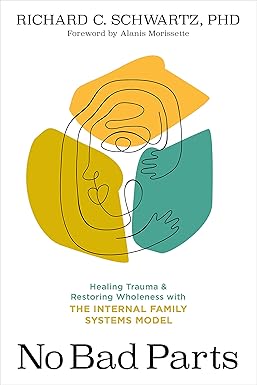
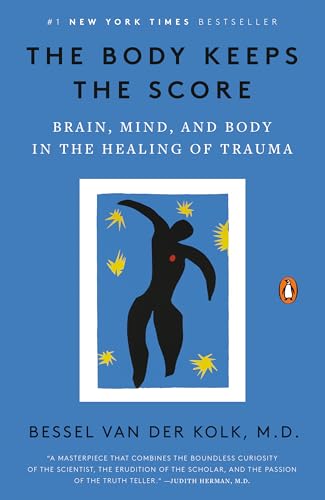

One Tool I Use When I Feel Myself Losing It
There are times when I feel my anger rising like mercury in a thermometer (I know that's know the way thermometers work anymore, but you get the point). I feel my heart begin to race or my palms begin to sweat. I start to actually feel hot. In that moment, I'm learning to pull back for just a second and have a brief conversation with my inner child.
I can see her. She's a little girl – maybe four years old. The image in my mind is from a photo of me before a ballet recital. I'm in one of those big bushy easter egg colored tutu's that little girls adore. I was posing for the pre-recital photos in our front yard. My dad saying, “Hold it…hold there just another minute…Let's try another one…”
I kneel down to her in moments of panic and I hold out my hand. I say, “Hey little one! I see you. I'm here with you.” I hold her and let her know, “Nothing that's happening right now is an emergency. I understand why you might see an emergency here. But I know something I bet you don't. I'm [fill in your age here] years old and have been through a lot and learned a lot. I've got this. I can keep you safe. You can rest now.”
And…This One's a Bit Odd…
When I begin to spiral, my body temperature rises. I'm not sure which happens first, but that heat sends me into panic mode. So my first go-to isn't cognitive—it's physical. I:
- Step outside if it’s cold
- Take a cold shower or bath
- Crank down the AC
- I have been known to lay on a cold bathroom tile floor 😜
Cooling down my body helps slow my brain. It’s helps me take a pause and interrupt the process of spiraling. As I was writing this, I decided to do a quick search to see if this was a thing, or just me. Apparently, it's a thing. And while I'm not ready to rush out and embrace the name, it's called “psychogenic fever.” It can have several causes, I just know this helps me and it might be a good go-to move for you too.
A Gentle Framework for Healing
Here are some steps generally adapted from trauma recovery work to try:
- Ground it. Connect mentally with your body. Breathe. Feel your feet on the ground.
- Recall it. Let a memory or trigger surface.
- Sense it. Where do you feel it in your body? Name the sensation.
- Name it. Is it fear? Shame? Anger? Get specific.
- Love it. Say, “I'm grateful for feeling this.” Especially the hard feelings.
- Feel it. Let it move you. Cry, shake, breathe.
- Listen. Consider what it’s here to show you.
- Share it. Journal or speak it aloud, maybe share it in an art form.
- Release it. Burn the page. Toss a rock in the river. Let it go.
You Don’t Have to Get It Perfect to Be Healing
You don’t have to feel Zen every minute of every day to be making progress. Just always remember that if you are doing even a little bit of this work, then you are better off today than you were yesterday. I'll be honest, for me, I've allowed a lot of this to come in its own time. I haven't pushed most things until I think I'm really close to breaking through to something. I haven't set deadlines or “goals.” I just want to be better today than I was yesterday.
You’re not alone in this. You’re already doing it. And that matters more than you know.


