

We've all heard that reading matters. But if your kid learned to read years ago and you've let the habit slide, here's why picking it back up might be the most important thing you do this year—for their future AND your relationship. The importance of reading books isn't lost just because they can read for themselves…
My father began reading aloud to my mother early in their marriage. It became their evening ritual—after dinner, side by side, lost in a story together. That stopped once they had me and life changed directions. They picked it back up as empty nesters.
So, their habit continued for decades. And here's the part that gets me: it continued through my mother's fifteen years with Alzheimer's disease.
Until her final days, my father read aloud to her. Every night. She could no longer follow a plot or remember characters. But she was soothed by the sound of his voice. The rhythm of the words. The presence of someone she loved, doing something they'd always done together.
A love of reading that she found early in life continued to bring her joy, even when everything else had slipped away.
That's the power of stories. That's what we're building when we read with our kids.
Being Mom is Hard. Pinning Makes it Easier 😉


Save this to remember the lasting joy and connection found in a book 📖.
Once My Child Can Read – Why?
I hear you. Once they're reading independently, it feels like your job is done, right?
Here's what changed my mind: Andrew Pudewa, founder of the Institute for Excellence in Writing, puts it this way:
“One of the biggest mistakes we make as parents and teachers is to stop reading out loud to our children when they reach the age of reading faster independently. In doing so, not only do we deprive them of the opportunity to hear these all-important reliably correct and sophisticated language patterns, we lose the chance to read to them above their level, stretching and expanding their vocabulary, interests and understanding.
Tragically, because of our hectic, entertainment-saturated, individualistic, test-obsessed and overscheduled lives, few of us take sufficient time to read out loud to our students, even into their early teens—a sensitive period when understanding of language and understanding of life are woven together and sealed into the intellect.”
Read that last part again: understanding of language and understanding of life are woven together and sealed into the intellect.
The tween and teen years aren't the time to stop reading together. They might be the most important time to keep going.
The Importance of Reading Books: What's Really at Stake
Yes, “experts” will tell you reading builds vocabulary, brain function, writing skills, focus, and empathy. And with all their fancy-pants high-falutin' clinical-ized double-blind super-duper clinical research studies, they're not wrong.
But let's stick what matters most for moms and kids:
College Test Prep (Without the Flashcards or Fights!)
Vocabulary and reading fluency are massive components of college entrance exams. Full stop. Pause – you can read that again. You see where I'm going with this, right?
You know what builds vocabulary and reading fluency better than any crazy expensive test-prep course? Thousands of hours of exposure to rich, complex language that can be found in stories.
This is stealthy-ass, next-level test prep. They'll never know what hit them, and it doesn't feel like work for either of you.
Skills That Machine “Intelligence” Can't Replicate
In a world where AI can write essays and answer questions, what makes humans irreplaceable? Empathy. Imagination. Self-reflection. Creativity. The ability to see what doesn't exist yet and bring it into being.
Reading fiction—especially reading it together, where you wonder and predict and discuss—builds exactly these skills. You're not just raising a reader. You're raising someone who can think in ways machines can't. Uniquely Human Traits
Empathy for a Complicated World
How does a child learn to understand experiences they've never had? Stories. Fiction is the safest way to walk in someone else's shoes, to feel what they feel, to see the world through different eyes.
We all know that deep understanding of someone's circumstances is more easily absorbed through storytelling than through a news broadcast or lecture. Your kids don't need to go through hardship themselves to start building empathy; they just need good stories.
At the Princeton Social Neuroscience Lab, psychologist Diana Tamir has demonstrated that people who often read fiction have better social cognition. In other words, they’re more skilled at working out what other people are thinking and feeling. Using brain scans, she has found that while reading fiction, there is more activity in parts of the default mode network of the brain that are involved in simulating what other people are thinking.
A Special Warning for Moms of Boys
I have two boys and all the moms of boys need to know this: Boys are at particular risk for dropping the reading habit. Why Boys Don't Read
Somewhere around middle school, reading becomes “uncool” for a lot of boys. Sports culture, gaming culture, peer pressure—it all conspires to make books seem like something girls do.
The consequences are serious. Boys who stop reading lose vocabulary and fluency at exactly the age when academics get harder. They miss out on fiction's empathy-building power at exactly the age when they're being told emotions are weakness. They lose a pathway to connection with parents at exactly the age when they're pulling away.
If you have sons, please don't let reading slide. The stakes are higher than you might realize.
The Real Reason I Keep Reading With My Kids
One of the best benefits of reading to an older child, for me, is that we can use reading as a way to connect at the very time they are becoming more independent and pulling away.
There are tons of forces pulling families in a lot of different directions these days. In our home, one of the biggest battles is screens—video games, phones, tablets. I work constantly to maintain our time together because I know how quickly it will be gone.
Having your big kid sit next to you while you share a story is priceless. As much as they won't admit it, they're enjoying it too.
You know how they say the best conversations with tweens and teens happen in the car, when you're not making eye contact? I think reading together works the same way. Side by side. Focused on something else. No pressure. And somehow, in that space, real conversations can pop up.
Learning how and why your kids think about the stories, the themes, and the characters you read priceless. Sharing how you think about these ideas, without the lecture or nagging, opens everyone's minds to new perspectives. This is connection disguised as story time.
It Doesn't Have to Be “Nose in a Book”
Before you tell me your kid won't sit still for reading, and if this is a new habit – they may not want to. Let me expand the definition of “reading” to get you started or to help you switch it up sometimes.
Audiobooks count. The vocabulary, fluency, story, and imagination all still work when they enter through the ears instead of the eyes. Audiobooks are especially powerful for car rides (captive audience!) and for neurodivergent kids, particularly those with dyslexia. Listening is not cheating, it's a different way of experiencing a narrative.
Storytelling games count. Taking turns adding sentences to a story. Making up wild tales at dinner. Playing narrative games. All of this builds the same muscles. One of my first jobs was as a clerk in a grocery store. When customers came through – I made up a narrative of who they were, what they were doing at the grocery store late at night. It kept me amused, awake, and entertained. These are a few that we've loved (with the exception of Life Out Loud – which is on my “to be played” list.)
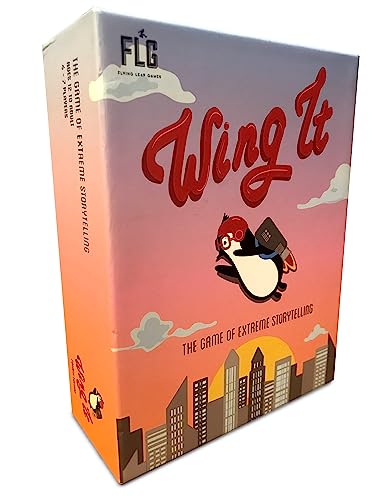


Narrative movies or theater productions count. You can even pair the experience with reading the book. “Let's read this and then watch the movie” is a legitimate gateway. Let theater and movies be your “gateway” stories. A comparison between a book and the movie will almost always reveal the relevance, if not superiority, of the book. Much to your child's amazement…
Graphic novels (and picture books) count. Visual storytelling is still storytelling. Complex vocabulary, narrative structure, emotional content—it's all there. And there's the added “visual literacy” which is like a beginner's course in “read the room.”


Your goal is story. Your format is flexible and can evolve and wax and wane back and forth.
What Happens When You Keep Reading Together
My son used to be trapped in a loop of Diary of a Wimpy Kid and Minecraft character guides. Occasionally he'd toss in a fantasy novel. I didn't mind—we all read below our level for pleasure sometimes.
But when we started reading together, his world opened up. Different styles. Different genres. Stories he never would have picked on his own but ended up enjoying.
Now he can enjoy, understand, and appreciate a much broader range of literature. Not because I forced “the classics” on him, but because we explored together.
And here's the thing I didn't expect: He still wants to do it. Even now that he's older. Fun fact: I was blown away when he told me that he chose Sun Tzu's “The Art of War” as one of his readings in English, even after the professor confessed it was “a bit dry.” 🤯
They may not crawl into your lap anymore. But they might just sit next to you on the couch. And sometimes, that's even better. Because at six foot, one-eighty, I'm not sure I really want him in my lap!
👉 Want practical strategies for making this work? Read the companion post: [How to Cultivate a Family Reading Habit (Even When Your Kids Think It's Uncool)]
One Last Thing…
Reading books to older children is one of the few things we can do today that families did 100 years ago. In a world of constant change, stories are still stories. Connection is still connection.
You're not just building vocabulary or test scores or even imagination, but you are doing all of that.
You're building shared experiences that will be forever remembered together. “Remember when…”
Reading creates a space where tweens and teens can still be close to you without it being weird. You're giving them tools to think, feel, and connect in a world that desperately needs humans who can do all three.
And someday—maybe decades from now—they might read to their one true love. Because you showed them how.
Always be your best, whatever that looks like for you today.
